A Beginner's Guide to Fishing the Arkansas River
A first trip becomes easier when you choose a manageable stretch, confirm the rules, and plan around the bank rather than rushing to the water.
A Beginner’s Guide to Fishing the Arkansas River
A first time fisherman may think that trying to choose between all of the different lures available is the hardest part of fishing a large river like the Arkansas River. In reality, the biggest difficulty is figuring out where you can fish from the bank, what your water is doing, and how you are going to spend your time learning a large river.
Imagine you have a couple hours to fish on a Saturday and you want to go fish the Arkansas River. As with most places to fish, there are long stretches of water and lots of different types of water to fish in. A first trip to a place like this can seem like a hard place to start to learn. But if you treat it as a small first-time fishing trip to be planned out rather than a long day of traveling to fish lots of different places, you can have a very fun time learning the river.
Pick a short section and learn its shape
Instead of trying to familiarize yourself with the entire length of the river, take a short 1-2 hour section and study its unique features. Mark a “start” and “end” on your map, take note of any roads, parking lots and paths of travel in the area and be aware that a visible pull-off does not necessarily mean public access to the bank.
The first visit to a river will be to learn one section of water. You can look for current seams, deeper water edges, slow water pockets, rocks and submerged structure and areas with lots of vegetation where fish will find shelter. As you become familiar with the different features of the section of water you are fishing, you will understand how they all relate to each other.
Have another location marked out to fish should the first location not work for whatever reason. For example, the parking area for the first location could be full, the path to the water may have been closed, or access to the water may be much harder than expected from the map.
Sort out access before the trip
Instead, find out where you can fish from the bank. The location where you park your car may be very different from the location where you can fish from the bank. Access points can be located on opposite sides of the road. In some locations, you may have to cross private property in order to access the location where you can fish from the bank.
Understand where you can fish and how to get there before you go. Check the official website for the land-management agency for the area where you plan to fish for that specific location. Find out what access is available, are there any restrictions, where can you park, and any other information you need to fish that location legally.
If the info for a spot isn’t clear enough, find another fishable location. Also, verify the info with the appropriate agency before heading out. Old forum posts and images of a map don’t qualify as current and accurate info for public access.
One of the less than exciting things to do before you go fishing is to check out the legal requirements for where you intend to go. However, checking out the regulations before you go can prevent some really bad situations.
Let the bank tell you what the river is doing
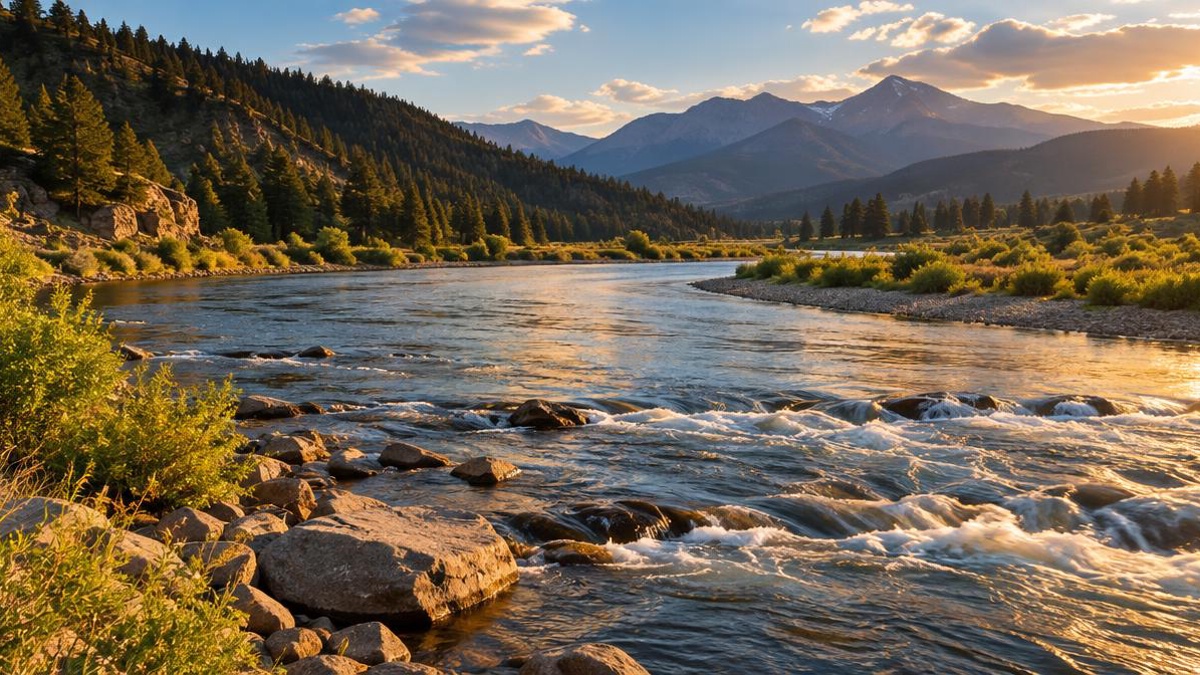
When Maya gets to her chosen fishing location, she will be able to sit back and enjoy the scenery after the first short while of looking around. She can then observe how the surface of the water is moving and compare this to the water a short distance upstream or down. The movement of the surface of the water and the drift of leaves and other debris on the surface will give away the current and where it is moving to. Also, the foam left on rocks and other features will give away the line of current.
As you go to the river, take note of the deeper water edges, rocks, brush and other structures as well as slower water pockets in the river. Make a few controlled casts to a spot and then go to another nearby location and see if what you saw held up. Note that different spots on a given stretch can have different characteristics.
Note the bank too. Remember that even relatively flat ground can be composed of loose gravel, wet, slimy rocks, very steep banks or thick tangles of brush. Keep a safe distance at all times and be mindful of how you’re going to manage your landing net once you hook a fish. A simple step back can allow you to easily re-position yourself on the bank to more safely re-cast.
Carry equipment that supports observation
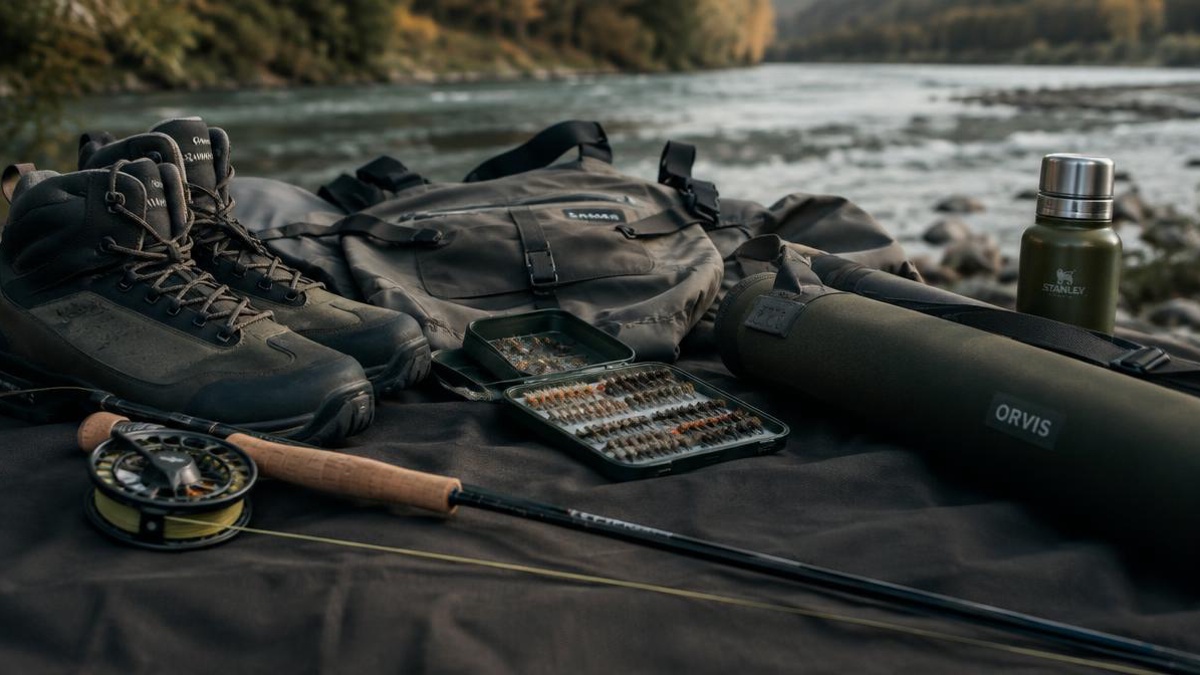
Again, Maya will only need a few pieces of tackle to go fish for a few hours on the Arkansas River. She has a rod and reel set up to use for bank fishing and she has included some spare line, a few types of terminal tackle that she thinks will be useful in the area she will be fishing, forceps or pliers to remove hooks from fish, and a small tackle container to store everything in. Sunglasses with polarized lenses will help Maya to see the surface of the water to locate fish. In addition to the tackle, Maya has brought layers of clothing to wear, water and a first aid kit in case of an emergency.
Keep a minimal amount of tackle and gear at your side for your fishing trip. Since you are just going for a short trip, keep a small tackle container, line, and terminal tackle for different types of fishing. Keep a note book and/or phone with you to write down and take pictures of the location you fished, time of day, etc. Make sure to take back any discarded line and packaging with you when you leave.
Make sure your knots are secure, that all guides are good, that your reel is working properly, and check your line for any signs of wear before you head out the door. The time to fix these problems is at home, not at the river.
Make the final official check
Recheck the official information for season, method, closures and other restrictions for the water and for the specific access point that she chooses for the day. Even restrictions on species can change and be restricted for certain times of the year. Make sure you have all necessary permits and have them with you when you go.
The review of the relevant information at home prior to heading out to the river can be done in a few minutes and is far more desirable than finding out the hard way at the river that there are problems with your tackle.