Choosing the Right Binoculars for Outdoor Adventures
The best field glasses are not simply the strongest pair on the shelf. Weight, viewing comfort, steadiness, and basic condition checks all shape how useful they are outdoors.
Choosing the Right Binoculars for Outdoor Adventures
Match the binoculars to the outing
For using handheld binoculars to look at Colorado scenery and for birdwatching, you want to choose a model that can be held for long periods of time. Because you will be carrying these for many miles on your back, they should also be small and light enough to carry after long days of hiking. Having the best specifications in the world will mean very little if the handheld binoculars are not comfortable to use for extended periods of time.
Unhurried scenery viewing allows for wide fields of view and the greatest comfort. Birdwatching however, is often a very changeable activity that requires you to focus very quickly on a subject which can then move very fast itself. A good pair of binoculars therefore needs to have easy subject acquisition, easy focus, and above all a very steady image when viewed from ‘handheld’.
Don’t be fooled by a great set of handheld binoculars for scenery viewing birding also known as birdwatching. Although there are many great pairs of handheld binoculars that can be used for both scenery viewing and birding, the locations and activities for each type of viewing can reveal important tradeoffs in how you will use the pair of binoculars. First, compact handheld binoculars are great for a quick look and are easy to carry in your daypack. Larger magnification handheld binoculars are great for scenery viewing and for immersion in the image of birds in front of you. But when you have a full pack for your long hikes and backpacking trips, will you really want to carry those larger binoculars also?
Pay attention to weight and balance
As with the total weight, the weight of the barrel of the binoculars is not an absolute number. How the weight distributes in the hand affects how long you can hold the binoculars before fatiguing. In general, a better balanced pair will have more comfortable viewing for longer periods.
At first, a pair of handheld binoculars feels great in your hands for thirty seconds or so. After a few minutes though, you start to feel the weight of them and how they are sitting in your hands. The fact that a pair of binoculars feel great for thirty seconds or so does not necessarily mean that they will feel great for minutes to come. In fact, in most cases, they will not.
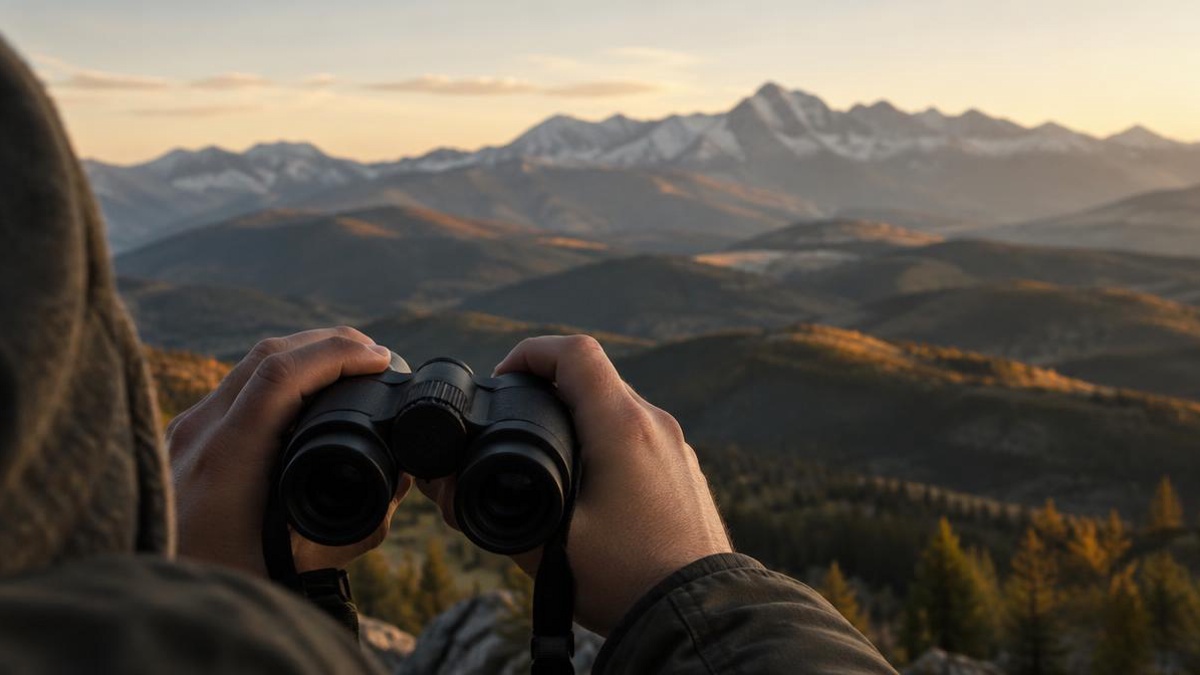
Hold binoculars with both hands with shoulders relaxed and arms close to the body. If possible, let elbows drop back to rest on chest. A stable stance with turned torso instead of twisting whole body will allow you to keep image steady for longer periods of time. and allow you to keep image steady for longer periods of time.
Storing your handheld binoculars against your body for longer views can help to counteract any motion. Of course, there are limits as to how well you will fare with high magnification, long periods of time spent gazing at subjects in the distance, against a backdrop of blustery winds, etc. However, with proper design, lighter weight, and improved balance, lower magnification can be just as good as higher power, and a strap or even harness can greatly facilitate carrying the things in the first place. But it won’t make up for poor shape or unbalanced configuration.
Check the eye relief
Eye relief (the space between your eyes and the eyepieces) is important, especially if you wear glasses for distance viewing or to protect your eyes in bright light. If there is too little eye relief the image may appear to have edges cut off. This can create ‘dark crescents’ which are awful to try and view through. Also if you wear glasses it is important to be able to press the glasses against the eyecups to view comfortably.
Look for adjustable eye relief and raise or lower the eyecups as designed to check for a comfortable view when you are looking through the binoculars. The view should remain consistent as you move your head up and down, even when you are looking at the view through the binoculars with your eyes close together (as when you have glasses on).
The discomfort and aberrations in vision brought on by having to reposition your glasses while using handheld binoculars for long periods of time will become very apparent. Having to constantly adjust your glasses in order to view handheld binoculars for long periods of time is not very pleasant.
Inspect them before heading out
Looking for dust, dirt, water, smudges or any other kind of marks in good lighting can expose potential problems before you head out on your trip. Use a clean lens cloth. Find out what kind of optical cleaning methods the manufacturer of your binoculars recommends and use those. Don’t use your shirt sleeve to try and wipe off grit (even if dry) as you will scratch the lenses.
After putting binoculars in your backpack for some time, it’s a good idea to check them for water in the housing, cracks in the lens(es), loose pieces of exterior housing, or stiffening of the focus wheel. Also, a set that has been moved between very cold and warm locations for a while should not be stored in a case for long. When condensation forms, it’s best to let it evaporate slowly.
Water in the housing, a cracked eyepiece, loose outer coverings and stiffening of the focus wheel are problems that should be attended to prior to storing your handheld binoculars in your pack for extended periods of time. However, don’t store a damp pair of handheld binoculars in their hardcase for extended periods of time. Allow time for any condensation to clear up after moving between very cold and very warm locations.
While basic care of handheld binoculars can not fix internal damage, it will help to ensure that small problems do not keep you from using your binoculars.